Advanced Wound Care Solutions by Pharmacy: What Most Patients Don’t Know
Posted on May 4, 2026 | 7 minutes read
We all expect a cut or a scrape to have a simple timetable. We clean the cut, cover the scrape, wait a few days, and forget about the whole thing. However, the rest of the world is not always so simple. Sometimes, even a minor cut or scrape can drag on if something is not right, whether it is from friction, poor circulation, pressure on the affected area, diabetes, inadequate protein intake, or a budding infection that you cannot see yet. This is when people generally begin looking for medications for quick wound healing, hoping that there is something available that they can grab today to speed the whole thing along.
It is also when the internet starts throwing around “miracle” options and medications for quick wound healing lists that make it sound like one product solves everything. The truth is, pharmacies can absolutely support wound care, but healing still depends on proper evaluation and consistent care. The best results come from matching the right approach to the right wound, and knowing when a wound needs medical attention instead of more self treatment.
What “Advanced Wound Care” Really Means (beyond bandages)
When we say “advanced wound care,” people generally assume this means something fancy, perhaps something expensive, perhaps something only a doctor’s office can do. Advanced wound care is simply a better overall plan for your wounds, not just treating them with a band-aid.
This generally means:
- Cleaning your wounds
- Protecting your wounds
- Managing moisture levels
- Managing infection
- Managing comfort
- Monitoring changes
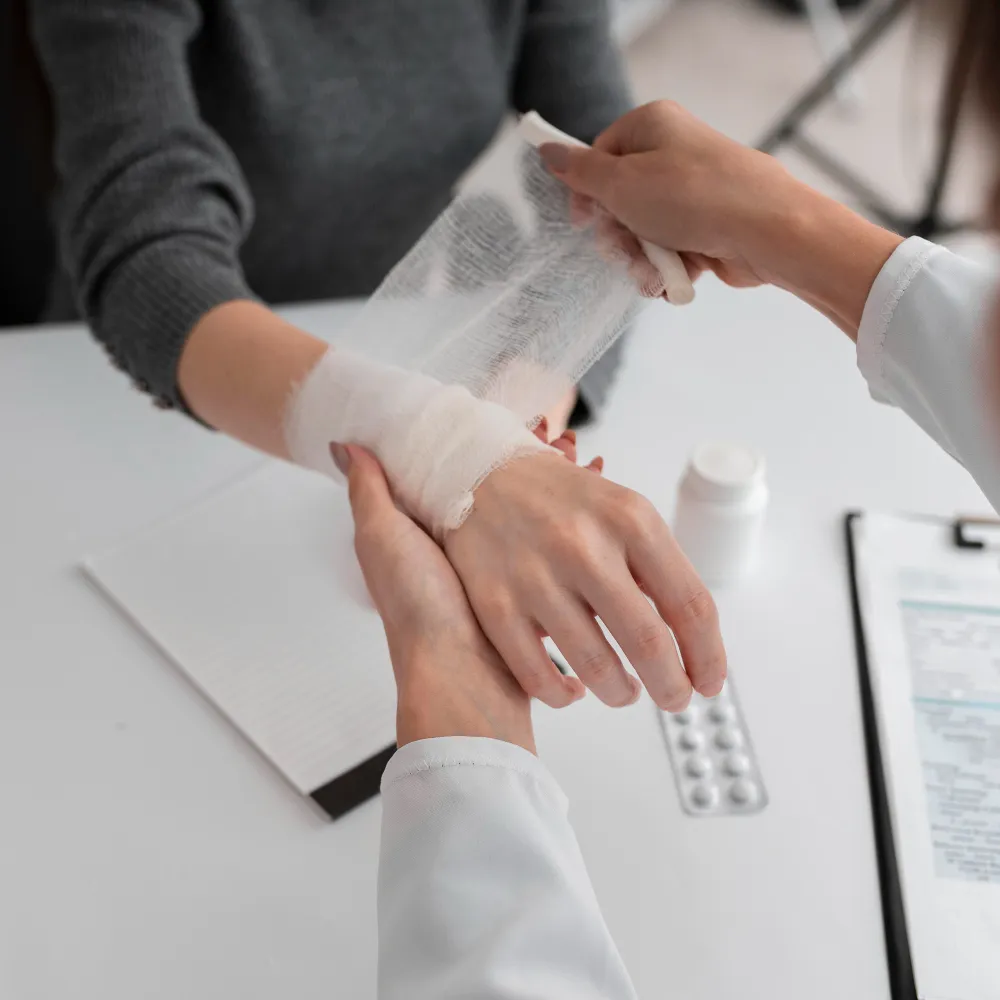
But where do we, the pharmacy, fit into this? Well, we can help you decide on good over-the-counter products, teach you how to use them correctly, and even help you get a prescription if you need it. Yes, people do ask for medicine for faster wound healing, but this is not something you just take once and expect instant gratification for.
The Biggest Myth: There’s One “Quick Wound Healing Medicine”
Here is the myth that wastes the most time and money: the idea that there is one “best” product for every wound.
Not all wounds are created equal. A clean cut from a kitchen knife, a burn wound, a surgical wound, a pressure wound, and a diabetic wound do not heal in the same way and do not require the same type of care. That is why a search for quick wound healing medicine can be misleading. The “right” option depends on the wound type, location, depth, drainage, and risk factors like diabetes or poor circulation.
A product that helps one wound may slow another. For example, using the wrong dressing can trap too much moisture, irritate the skin, or fail to protect the area from friction. The goal is not to find the most popular product. The goal is to find the correct strategy.
What Pharmacies Actually Provide for Faster Healing Support
Pharmacies support wound care in practical ways that most patients do not realize until they ask.
Prescription Support (when appropriate)
Depending on the situation and a clinician’s evaluation, pharmacies may dispense:
- Topical antibiotics (when prescribed and appropriate)
- Pain relief options
- Anti inflammatory medications
- Treatments to manage infection or inflammation
Over the Counter Support
Pharmacies can also guide you toward:
- Wound cleansers and gentle irrigation options
- Skin protectants and barrier creams
- Dressings and gauze options
- Antimicrobial wound products (high level guidance)
- Tape and wrap options that reduce irritation
Many patients walk in asking for medicine for quick healing of wound, but the most helpful thing a pharmacist can do is ask a few questions first. Because sometimes the best “faster healing” support is not a stronger product, it is a better match between the wound and the care method.
Dressing Choices Patients Don’t Realize Matter
A lot of people underestimate dressings. They assume a bandage is a bandage. But dressing choice can change healing time because it affects moisture balance, protection, and how often the wound gets disturbed.
At a high level, dressings may be chosen based on whether the wound is dry, draining, or in a high friction area. Some common categories include:
- Hydrocolloid dressings (often used in a moist wound environment)
- Foam dressings (good for absorption and cushioning)
- Alginate dressings (often used in a wound environment that has a lot of drainage)
- Antimicrobial dressings (used in some high-risk situations)
This is why a focus only on medications for quick wound healing can be missing the larger picture. The difference between a wound that will just continue to reopen and one that will finally begin to heal and mend can be the dressing.
Infection Prevention and Warning Signs Most People Miss
Infection is one of the biggest reasons that a wound can stall. It is also one of the things that can be easily missed, especially if one is busy or the wound is in an area that one cannot easily see.
Warning signs that should be taken seriously include:
- Increasing redness and warmth in the area around the wound
- Increasing swelling that is getting worse, rather than better
- Bad odor
- Pus or unusual drainage
- Fever or chills
- Worsening pain, especially after initial improvement
The point here is that “medicine for faster wound healing only works if the infection is treated.” This means that if the wounds are infected, then the addition of random products on them may result in a delay in the proper treatment of the wounds. It is always better to get checked early rather than wait for the problem to become more serious.
Special Cases: Diabetes, Poor Circulation, and Chronic Wounds
Some wounds are special because the body is already fighting an uphill battle.
For instance, if a person has diabetes, poor circulation, nerve problems, or a history of poor healing, then problems may occur quickly. Pressure wounds, diabetic foot wounds, etc., are special kinds of wounds.
Pharmacies can still contribute to the solution by helping with:
- Medication adherence (especially for diabetes, hypertension, or circulation problems)
- Consistent access to wound supplies
- Education on daily wound checks and skin protection
- Coordination support, helping you understand what to ask your provider
Seek urgent care if you notice spreading redness, severe pain, fever, blackened tissue, or if a wound on the foot is not improving, especially with diabetes.
What to Ask Your Pharmacist (so you don’t waste time or money)
A pharmacist can help most when you give them the right details. If you want to choose medicine for quick healing of wound safely, walk in ready to answer a few basic questions:
- What kind of wound is it (cut, burn, surgical, blister, ulcer)?
- How long has the wound been present?
- Is the wound getting better, worse, or staying the same?
- Is there drainage, and what does it look like?
- How painful is the wound today compared with the first day?
- Do you have diabetes, circulation problems, or immune system problems?
- What medicines are you currently taking?
- Do you have any allergies to antibiotics, adhesives, or topical preparations?
A good pharmacist will be able to tell you how to clean the wound, how often to change dressings, what not to mix, and when you should stop treating the wound yourself and seek medical care.
Conclusion
It is completely normal to want faster healing. However, the fastest healing for a wound is achieved with the right plan, not the loud promise—especially with support from Citizen Compounding.
Pharmacies can guide you to the right product, how to use the product, and how to avoid common pitfalls. Just remember, “quick fixes” are not always safe. Patients looking for a quick wound healing medicine should focus on the right wound care strategy, as that is what really supports the healing process without any problems.
Not Sure If Your Wound Is Healing Normally?
Get the right guidance on dressings, warning signs, and medications for quick wound healing, so you don’t waste time or risk infection.